Table of contents
Keyless entry, instant guest messaging, automated pricing, and self-check-in have become staples across hotels of every size, from roadside chains to boutique independents, and while these tools promise efficiency, their quietest effect is often overlooked: they are reshaping how staff spend their hours, how managers schedule, and what “service” looks like on a Tuesday night with two call-outs. As automation spreads, the operational story is less about flashy tech and more about workflow, workload, and the new pressure points that appear backstage.
When minutes vanish, new tasks appear
“Automation saves time” is the headline claim, yet on property the math is messier, because time savings rarely arrive as a neat block that can be removed from the schedule. Hotels run on fragmented tasks, and many are tied to guest uncertainty, exceptions, and coordination between departments. Still, where automation targets repetitive moments, the gains can be real. Self-service check-in, digital keys, and pre-arrival messaging reduce the number of front-desk interactions needed for routine arrivals, and that matters when peaks hit. In the United States, major operators have leaned into mobile check-in and digital keys at scale; Marriott said it had surpassed 10 million mobile key uses globally as far back as 2019, and since then adoption has widened across brands as apps have become standard touchpoints.
But as minutes vanish from one corner of the day, they often reappear elsewhere. A guest who never queues at the front desk might still message three times before arrival, and the property now needs someone monitoring the inbox with the same urgency once reserved for the lobby line. A kiosk that reduces check-in questions can increase “edge cases”: ID mismatches, card authorization holds, early-arrival requests, room moves, accessibility needs, and disputes about deposits or incidental charges. The workflow shifts from face-to-face service to exception handling, and exception handling is cognitively heavier, because it demands judgment, policy knowledge, and calm communication under time pressure.
There is also a redistribution effect inside the building. When front-desk volume drops, managers may reassign agents to concierge-like problem solving, upselling, or guest recovery, and in lean operations those agents may be pulled into back-office chores such as audit prep or inventory checks. Housekeeping, meanwhile, increasingly receives work orders through digital task systems, which can reduce radio chatter and lost notes, yet also create a new expectation of traceability: every towel request logged, every maintenance issue timestamped, every delay visible. That visibility can improve accountability, and it can also add pressure, because the system never “forgets” the request the way a busy corridor sometimes does.
The front desk becomes a control room
Ask a seasoned receptionist what has changed in the last decade and you often hear a similar theme: fewer simple conversations, more simultaneous channels. Phone calls still arrive, walk-ins still happen, and deliveries still need handling, yet now there is also live chat, SMS, WhatsApp, app notifications, OTA messages, and review platforms feeding into the same shift. The modern front desk looks less like a counter and more like a control room, where the critical skill is triage. Which message is urgent, which is a potential scam, which is a complaint that will turn into a one-star review if ignored for 20 minutes?
Automation accelerates this transition because it standardises the “happy path” and leaves humans with what the software cannot confidently resolve. That can be good for service quality, because it pushes staff toward higher-value interactions, and it can be destabilising if training lags behind. A night agent who used to complete a predictable routine might now need to understand access control failures, payment tokenization hiccups, channel manager mis-syncs, and the difference between a PMS outage and a Wi-Fi issue, all while keeping their tone warm with a guest who just wants to sleep.
There is a staffing implication too. Many hotels have been operating with tighter teams since the pandemic, in part because hiring and retention remain difficult in hospitality. In the US, the Bureau of Labor Statistics’ Job Openings and Labor Turnover Survey has repeatedly shown elevated churn in leisure and hospitality compared with many other sectors in recent years, a backdrop that makes automation attractive as a stabiliser. Yet the control-room model requires different competencies: written communication, system navigation, fraud awareness, and a comfort with switching contexts dozens of times per hour. When operators automate without investing in those skills, they risk burning out the very people meant to be “freed” by technology.
Managers also face a subtler challenge: performance becomes easier to measure, and therefore easier to contest. Response times, task completion rates, upsell conversions, and satisfaction scores can be tracked in granular dashboards. That data can help identify bottlenecks, and it can also turn into a blunt instrument if leaders treat metrics as a substitute for judgment. A fast reply is not always a good reply, and a perfectly on-time task list does not guarantee that a guest felt cared for. The control room runs on numbers; hospitality still runs on perception.
Housekeeping’s quiet data revolution
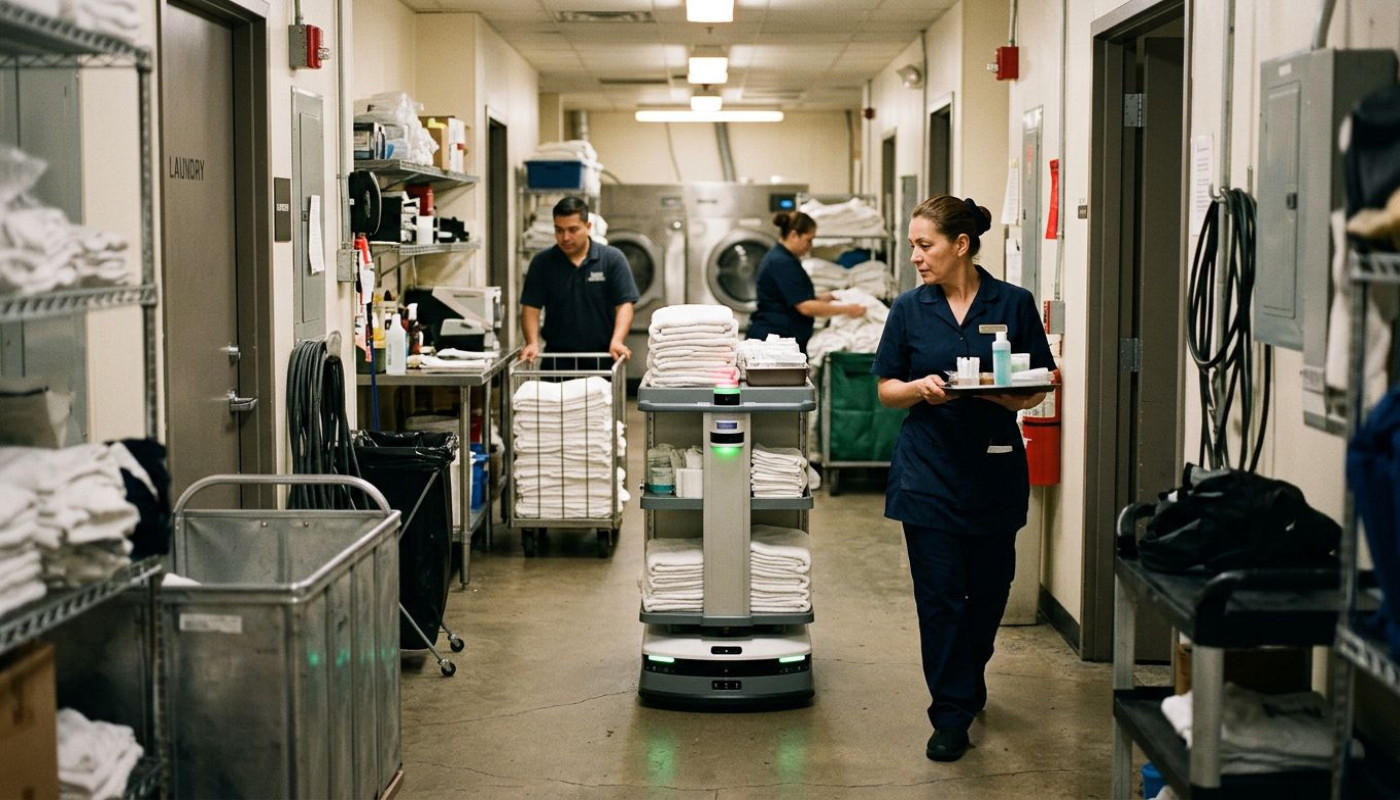
Few departments feel workflow change as intimately as housekeeping, because the unit of work is physical, time-bound, and tightly linked to revenue. A room not cleaned on time is a room that cannot be sold, and in many markets the economics of occupancy have pushed hotels to squeeze more out of fewer labour hours. Task automation and mobile housekeeping apps have been pitched as a way to reduce wasted walking, prioritise rooms based on arrivals, and coordinate with maintenance in real time. Where these systems are deployed well, supervisors can assign rooms dynamically, track which rooms are inspected, and send alerts when a guest requests a late checkout, and that can reduce rework and avoid the classic scenario of a cleaned room being reopened due to a last-minute status change.
Yet the data revolution has a human cost if it is handled carelessly. Digitising tasks makes invisible labour visible, and that can be empowering when it helps justify staffing levels, realistic room quotas, and fair scheduling. It can also become punitive if the only lesson drawn from the data is “go faster”. Housekeepers often describe their work as an athletic job: lifting, bending, pushing carts, and moving quickly across floors. Piling on constant app-driven updates, photo requirements for documentation, or an expectation that every minor issue be logged can slow the work while simultaneously raising the bar, and the result is stress, not efficiency.
The operational reality is that housekeeping productivity is shaped by constraints that software cannot erase: room layouts, elevator wait times, linen logistics, supply shortages, and the variability of guest behaviour. Late checkouts and unpredictable departures remain a structural challenge, and they have grown more important as hotels push higher occupancy with fewer buffers. Automation can help forecast and prioritise, but it cannot create extra minutes between 11:00 and 15:00 when arrivals surge. The best-run properties use data to negotiate smarter policies, such as incentivising early check-in fees with realistic staffing, staggering arrival waves with targeted messaging, and smoothing the day by coordinating sales promises with operations capacity.
There is also a dignity component. When technology is framed as surveillance, morale drops, and the department that already struggles for recognition feels further squeezed. When it is framed as support, it can raise standards without raising resentment, because it reduces chaos, clarifies expectations, and provides evidence when staffing is insufficient. The difference is leadership: whether the numbers are used to understand work, or to squeeze it.
Automation’s hidden risk: brittle operations
What happens when the system fails? That is the question many teams fear, because automation can make operations more brittle if contingency planning is weak. A property that has reduced front-desk staffing because most guests use digital keys may suddenly face a lobby full of frustrated arrivals when the lock provider has an outage, and a hotel that relies on automated messages may discover that a misconfigured template sends the wrong check-in code, the wrong parking instructions, or the wrong cancellation terms. The impact is not theoretical; software incidents are a fact of life, and hospitality’s always-on nature makes downtime uniquely painful.
Brittleness also shows up in decision-making. Automated revenue management can adjust prices faster than a human, but if the data feeding the engine is wrong, or if an unusual event breaks historical patterns, the hotel can drift into mispricing that staff only notice after complaints, empty rooms, or angry owners. Automated screening can reduce fraud, yet it can also create false positives that block legitimate guests, and then the front desk becomes the appeals court at midnight. Each automation layer can reduce routine work, and each layer can add a dependency that staff must be trained to diagnose under pressure.
This is why some operators now treat “manual mode” as a core competency, not an embarrassment. They maintain printed procedures for check-in during outages, train staff on how to issue backup keys, and ensure that managers know how to reconcile payments if integrations break. They also audit their automations like they would audit a night audit checklist: are the messages accurate, are the triggers correct, are exceptions handled, and is there a clear owner when something goes wrong? For teams evaluating specific tools and operational trade-offs, reading a detailed Hospitable review can help clarify which features truly remove work, which ones simply move it around, and what level of oversight is still required day to day.
What to budget, and how to roll it out
Plan automation like a renovation, not like an app download. Costs extend beyond subscription fees, because the real spend is time: configuration, training, and the first months of troubleshooting. Build a rollout calendar that avoids peak periods, budget for vendor onboarding, and assign a single internal owner per system, so that accountability is clear when messages misfire or staff revert to old habits.
Look for public support where it exists. Depending on the country and region, hotels may access digitalisation grants, workforce training funds, or energy-efficiency programmes linked to smart building upgrades, and even when aid is limited, chambers of commerce and tourism boards often maintain guidance on current schemes. Most importantly, match the tool to the workflow: automate the repetitive, protect the human moments, and keep a manual fallback ready for the night it all goes offline.
Similar articles